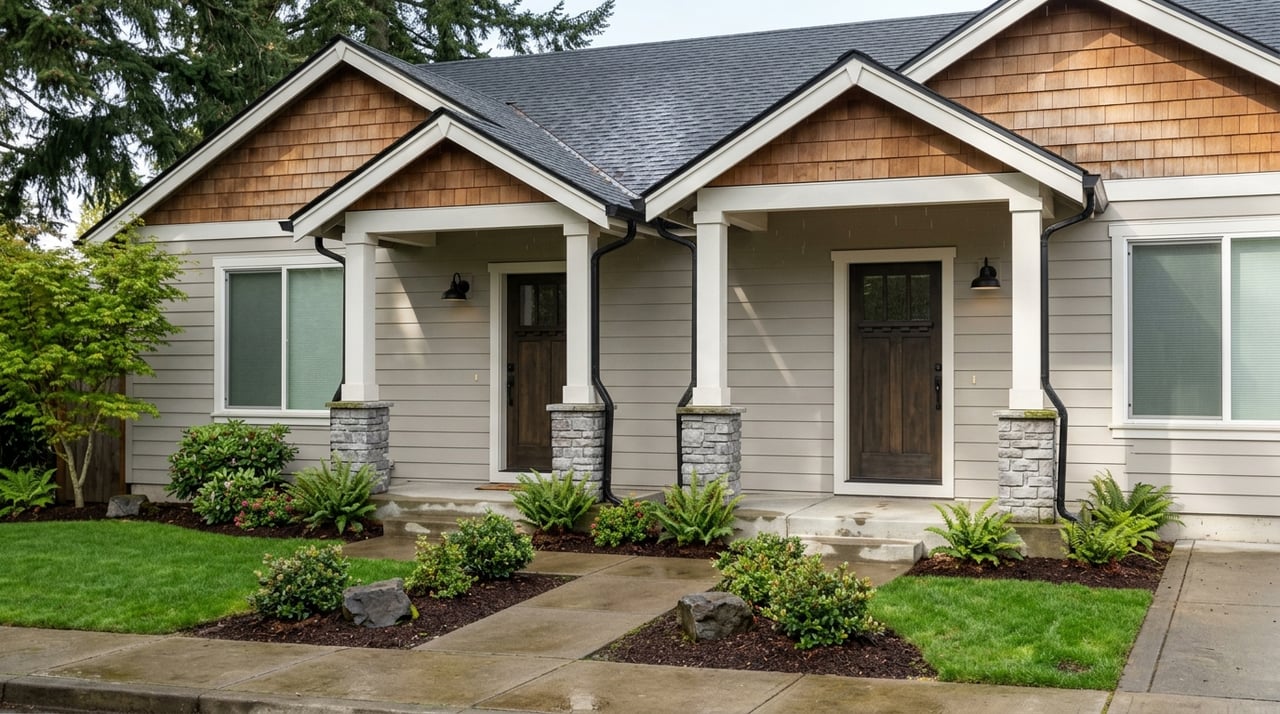
If you have been eyeing Everett as a place to buy your next investment property, duplexes and small multifamily can deserve a closer look. This part of Snohomish County has steady rental demand, a large renter base, and a housing stock that still creates room for smart value-add plays. If you want to understand what makes a deal pencil here, what risks to watch, and how financing changes by unit count, this guide will help you get grounded before you act. Let’s dive in.
Why Everett attracts small multifamily investors
Everett stands out as a renter-supported market with real affordability pressure. The City of Everett’s data shows an estimated population of 114,700, a median gross rent of $1,675, and a high share of households spending more than 30% of income on housing. According to the city’s data and reports, that includes 58% of renters and 33% of homeowners with mortgages.
That matters if you are investing in duplexes, triplexes, or fourplexes. Demand is not just tied to hot market momentum. It is also supported by the basic need for attainable rental housing in a city where the owner-occupied housing rate is 49.0% and median gross rent is $1,740.
Everett’s household trends also support smaller rental formats. The city’s housing appendix shows 44,255 households in 2023, median household income of $81,502, and a growing share of older residents. Those patterns help explain why lower-maintenance housing options like duplexes and compact multifamily buildings can remain relevant across different renter groups.
Housing supply still looks tight
Everett has added housing over time, but not at a pace that fully removes pressure from the market. From 2010 to 2023, the city added about 3,565 housing units, or roughly 274 per year, based on the city’s housing appendix. Only 509 units were built after 2020.
For investors, this slow growth matters. It suggests you are not looking at a market flooded with brand-new supply in every pocket of the city. It also helps explain why older duplexes and small apartment properties can still present opportunities for renovation, repositioning, or improved management.
Another key point is the age of the housing stock. About half of Everett’s housing was built before 1980, which can create both upside and responsibility. Older properties may offer better entry pricing or room to raise performance, but they also require careful budgeting for repairs, systems, and permit-related work.
What supports rental demand in Everett
Local employment and transportation are a big part of Everett’s investment story. Snohomish County identifies major employers such as Boeing, Providence Swedish, The Everett Clinic, and Naval Station Everett in its workforce report. A broad local job base can help support renter demand across different unit types and price points.
Transportation access also matters. Everett Station functions as a regional transportation hub serving the city and nearby communities, which adds practical appeal for many renters. In the broader Puget Sound market, CBRE reported Q4 2025 occupancy at 94.7% and average rent at $2,206 per unit, reinforcing the idea that rental demand remained durable even as conditions cooled from earlier peaks, as cited in the same county workforce report.
Cap rates and pricing expectations
When you underwrite Everett duplexes and small multifamily, a practical cap-rate range is generally in the low-5% to mid-6% band. Regional reporting from Lee & Associates noted a 2025 Tri-County average cap rate of 5.66%, along with Snohomish County average pricing of $255 per square foot. That same report also cited Everett and similar submarkets trading near $200,000 per unit, with Class C cap rates around 5%.
This does not mean every Everett property should be underwritten at the same yield. More stabilized assets in stronger condition often trade at lower cap rates. Older properties with deferred maintenance, lease-up needs, or management issues usually need a higher cap rate to make sense.
The practical takeaway is simple: the cleaner and more predictable the income, the more aggressively buyers may price the asset. If a property needs significant work, you should expect to underwrite more conservatively.
Everett zoning basics to know
Before you count on adding units or changing a property’s use, it helps to understand Everett’s development rules. The city updated its Unified Development Code, effective July 8, 2025. Residential districts include R-S, R-1, R-2, R-2(A), UR3, and UR4, and Everett’s middle-housing materials recognize duplexes, triplexes, and fourplexes as established housing forms in the city.
Townhouses and duplexes are allowed in R-S, R-1, R-2, and R-2(A) zones, subject to review and density or lot-size standards. That means zoning may create opportunity, but it does not remove the need for site-specific verification. If you are buying for future upside, you will want to confirm what is actually allowed on that parcel before assuming value.
Two more details can matter for smaller projects. Everett states that accessory dwelling units under 1,200 square feet do not require off-street parking, and a transportation demand management plan is not required for single-, duplex-, or triplex-dwelling units. If you plan new construction or add units, impact fees for traffic, schools, and parks may also apply.
Why MFTE usually is not the play
Some investors ask whether Everett’s Multifamily Tax Exemption program can improve returns on a duplex or triplex purchase. In most cases, the answer is no. The city’s MFTE program page says new multifamily construction must include at least 16 dwelling units and be located in designated areas.
That means MFTE can matter for larger development projects, but it is usually not relevant for a standard small multifamily acquisition. If your focus is duplexes through fourplexes, you are more likely to create value through buying well, improving operations, and managing renovation costs carefully.
How to underwrite rents in Everett
A strong Everett underwriting model should use both city housing data and current market conditions. The city’s housing appendix lists 2023 median gross rents by bedroom at $1,229 for studios, $1,478 for one-bedrooms, $1,715 for two-bedrooms, $1,969 for three-bedrooms, and $2,461 for four-bedrooms. It also reports a citywide 2020-2024 median gross rent of $1,740.
At the same time, Snohomish County’s Q2 2025 multifamily data, cited in the same housing appendix, showed 6.7% vacancy and $1,996 average effective rent per unit. That gives you two useful lenses. One reflects household-level rent support, and the other reflects more current apartment-market performance.
The best approach is to compare your property against both. If you rely only on optimistic asking rents or only on backward-looking census figures, you can miss the real picture. A good pro forma should be realistic, not just hopeful.
Expenses to stress-test before you buy
Income gets attention, but expenses are where many small multifamily deals go sideways. You should stress-test vacancy and credit loss, property management, repairs, insurance, taxes, reserves, and any permit or code-related costs tied to renovation. On older Everett properties, these line items can move more than first-time investors expect.
Washington’s landlord-tenant environment also deserves a place in your underwriting. The Washington Attorney General’s landlord-tenant guidance says the state’s rent stabilization law limits most residential rent increases to the lesser of 10% or 7% plus CPI after the first 12 months and requires 90 days’ written notice. The Department of Commerce guidance cited there says the 2026 maximum annual increase is 9.683%.
That does not mean rent growth disappears. It does mean aggressive rent-step assumptions can create risk, especially in your exit scenario. If your deal only works with sharp annual increases, it may not be as strong as it first appears.
Compliance matters more than many investors think
Operational details can have a direct effect on cash flow and risk. The Attorney General’s guidance notes that landlords must give 14 days’ notice before starting an eviction for nonpayment, and fee-in-lieu-of-security-deposit terms must be disclosed in writing. These are not small details if you plan to self-manage.
For Everett investors, the bigger operational risks often include turnover friction, compliance mistakes, rising expenses, and permit exposure during renovations. Occupancy still matters, but day-to-day success often comes down to how well you manage the rules and the property itself.
Financing changes by unit count
One of the biggest advantages of duplexes, triplexes, and fourplexes is that financing may fall into residential loan territory. For Snohomish County, the FHFA 2026 conforming loan limits are $1,063,750 for one unit, $1,361,800 for two units, $1,646,100 for three units, and $2,045,700 for four units. That can make small multifamily more accessible than many buyers expect.
Once a property reaches five or more units, the financing picture changes. Fannie Mae’s Small Mortgage Loan program goes up to $9 million with up to 80% LTV and a 1.25x minimum DSCR. Freddie Mac’s small balance loan product also serves this space, and HUD’s Section 223(f) program applies to existing multifamily rental housing.
In practical terms, Everett duplexes and triplexes can often be evaluated like residential high-balance opportunities, while 5+ unit buildings move into agency or FHA multifamily structures. If you are deciding between a fourplex and a sixplex, financing alone may shape your strategy as much as the rent roll does.
A smart Everett investment strategy
If you are targeting Everett, start with a simple question: do you want stable income now, or are you looking for a value-add project with more moving parts? Stabilized properties may offer smoother operations but lower initial yield. Heavier value-add deals may offer more upside, but only if you budget correctly and understand local rules.
It also helps to focus on a few property traits:
- Unit mix that matches local rent support
- Realistic renovation scope for older buildings
- Clear zoning and permit path for any future changes
- Financing that fits your timeline and risk tolerance
- Conservative assumptions for rent growth and vacancy
The right property is not always the one with the flashiest upside. Often, it is the one where the numbers still make sense after you account for repairs, compliance, and normal operating friction.
Final thoughts on Everett duplex investing
Everett can make sense for duplex and small multifamily investors because the market has durable rental demand, slow supply growth, and a housing stock that still leaves room for strategic improvements. At the same time, the deals that work best are usually underwritten with discipline, not just optimism. If you want help evaluating Everett investment opportunities, comparing neighborhoods, or understanding how a duplex, triplex, or small apartment purchase fits your goals, Team NSRG is here to help you move forward with clarity.
FAQs
What makes Everett attractive for duplex and small multifamily investing?
- Everett has a strong renter base, real housing affordability pressure, slow housing growth relative to demand, and a mix of local employers and transportation access that supports rental demand.
What cap rates are common for Everett small multifamily properties?
- A practical underwriting range is often in the low-5% to mid-6% cap-rate band, with more stabilized assets usually pricing lower and heavier value-add properties typically needing higher yields.
What rents should you use when underwriting an Everett duplex or triplex?
- You should compare the property to Everett’s city rent data by bedroom type and to more current multifamily market conditions, then use conservative assumptions instead of relying on best-case asking rents.
What zoning rules matter for Everett duplex investors?
- Everett’s zoning code allows duplexes in several residential zones subject to review and density or lot-size rules, so parcel-specific verification is important before you assume expansion or redevelopment potential.
What financing options are available for Everett duplexes and fourplexes?
- Duplexes, triplexes, and fourplexes may qualify for residential financing up to Snohomish County’s conforming loan limits, while 5+ unit properties typically use agency or FHA multifamily loan structures.
What landlord rules should Everett multifamily investors know?
- Washington law limits most annual residential rent increases, requires 90 days’ written notice for many increases, and includes specific notice and disclosure rules that can affect property operations and cash-flow planning.