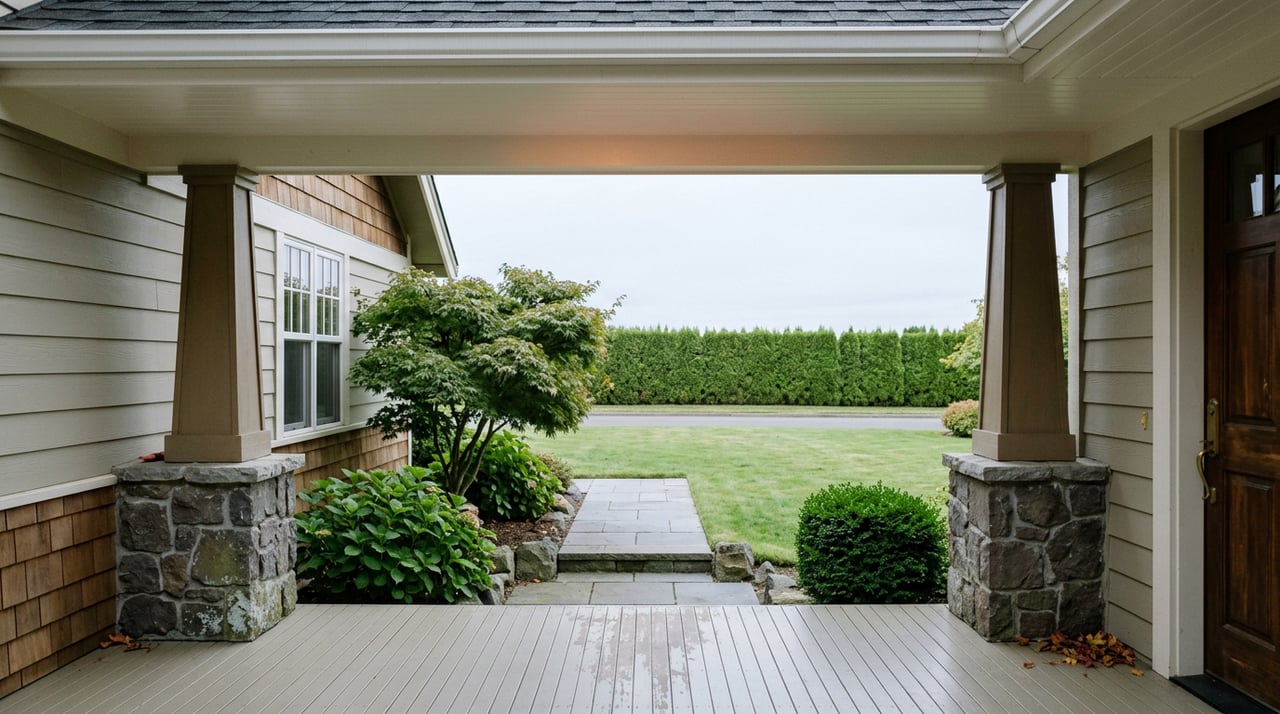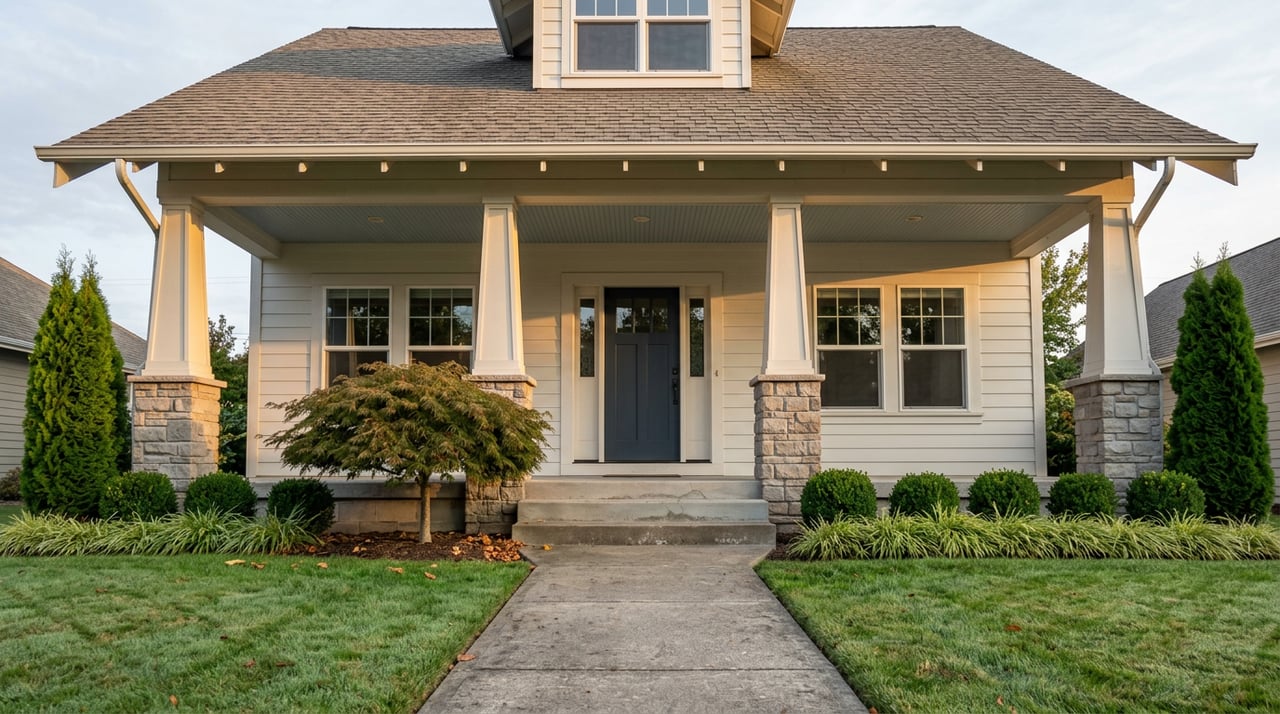
Two houses. Both a five-minute drive from Microsoft's main campus. Both zoned for Lake Washington School District. Both, on paper, the same bet for a buyer trying to get ahead of a return-to-office mandate that just turned commute time into a hard requirement instead of a lifestyle preference.
One of those houses sits a five-minute walk from a Link light rail platform. The other sits on a hill with no station within reach except a shuttle van. Six months ago, that difference barely showed up in a listing description. Now it's arguably the single biggest variable separating two homes that look identical on a map.
The Deadline That Changed the Math
Microsoft's return-to-office rollout started with Redmond. Employees living within a 50-mile radius of the company's Puget Sound offices were told to be back in the building at least three days a week by the end of February 2026, with the policy expanding to other U.S. locations afterward. What made this version different from the soft hybrid guidance of the last few years is the radius itself. Fifty miles is a hard line, not a suggestion, and Redmond sits at the center of it.
This wasn't a policy floated and forgotten. Around the same window, Microsoft locked in nearly 900,000 square feet of office space in downtown Redmond, renewing a lease on two buildings at Redmond Town Center and reoccupying two office complexes at Millennium Corporate Park that it had tried to sublease just a couple of years earlier. That's a company putting real square footage behind a mandate, after spending 2023 through 2025 quietly walking away from almost two million square feet of office space across the lake in Bellevue. The physical footprint tells you the commute requirement isn't a temporary corporate mood. It's a bet Microsoft is making on Redmond specifically.
Same Five Minutes, Two Different Bets
Here's where the assumption most buyers walk in with starts to break down. Education Hill and Overlake are both routinely described as five-to-ten-minute drives from Microsoft's front door, and current listing data backs that up: single-family homes in good condition run roughly $1.1 million to $1.6 million on Education Hill and $1.2 million to $1.8 million in Overlake. Close enough in price and drive time that a buyer comparing the two might treat them as interchangeable.
They aren't, once you factor in what happens on a day when 520 backs up or a work event runs late. Overlake sits on two of Redmond's four light rail stops, Redmond Technology Station and Overlake Village Station, with the Technology station connected directly to Microsoft's west campus by a pedestrian bridge the company itself helped fund. If the drive is bad, there's a train every ten minutes from 5:30 a.m. to 9:30 p.m., seven days a week, for a fare of $2.25 to $2.50.
Education Hill has no station of its own. Its only rail connection is a free shuttle, the RedLink, that riders book through the Circuit app to reach Downtown Redmond Station. It works, but it's a scheduled dependency layered on top of a car commute, not a second option sitting a few blocks away.
For a buyer trying to guarantee three in-office days a week without betting everything on traffic conditions, that's not a small distinction. It's the difference between a commute with a backup plan and one without.
What Downtown Redmond Is Already Seeing
The mandate's effects aren't theoretical. Downtown Redmond spent the last few years watching lunchtime foot traffic thin out as Microsoft employees worked from home, and business owners noticed.
"The lunch business around Redmond just isn't the same."
That's how Wilhite, who works with downtown Redmond's business community, described the stretch since the pandemic began pulling office workers away from downtown restaurants and shops, in comments to KOMO News earlier this year. Sip Thai Zooom, the restaurant run by owner Joon Likitjesada in the heart of downtown Redmond, is one of the businesses now watching to see whether returning employees actually show up for lunch again. The mandate is only months old, but the businesses closest to the office buildings are already treating it as something real enough to plan around, not a policy that might quietly get walked back.
What Changed on March 28
The other half of this story is transit, and it's easy to miss because it happened almost simultaneously with the RTO rollout rather than in response to it. On March 28, 2026, Sound Transit's 2 Line completed its Crosslake Connection, linking Redmond's four stations, Overlake Village, Redmond Technology, Marymoor Village, and Downtown Redmond, across Lake Washington to Bellevue and Seattle for the first time.
Before that date, a Redmond resident without a car had a genuinely limited commute radius. After it, someone living near any of those four stops has a car-free route not just to campus, but to downtown Bellevue and into Seattle. That matters for a specific kind of buyer this mandate is pulling into the market: employees who had been working remotely from other states and are now relocating to comply, some of whom are shopping for a home before they've fully mapped out which office building their team will actually sit in day to day. A station-adjacent home hedges that uncertainty in a way a car-only commute doesn't.
What the Citywide Median Is Actually Blending
If you've looked up Redmond's numbers recently, you've probably noticed they don't agree with each other. One national home-value index put the typical Redmond home at roughly $1.35 million as of July 2026, down close to 4 percent from a year earlier. A separate MLS-based regional report for that same month put the median sale price closer to $1.36 million, up almost 5 percent year over year. One national brokerage's own monthly release showed sales volume actually shrinking, 159 homes sold in Redmond in June 2026 compared with 210 the year before, even as prices held roughly flat.
None of these sources are wrong. They're measuring a market that is pulling in two directions at once, and a single citywide figure can't show you which direction applies to the house you're looking at. Two Redmond neighborhoods have transit redundancy baked into their commute story right now, Overlake and the stations closest to Downtown Redmond. Two others don't. North Redmond, priced from roughly $900,000 to $1.3 million for single-family homes in good condition, still sits in Lake Washington School District and still gets you meaningfully more house for the money, but it's a longer drive with no rail alternative if that drive gets worse. Redmond Ridge, the master-planned community on Redmond's eastern edge bordering Sammamish, runs $1.1 million to $1.8 million with newer construction and HOA amenities, but the same car-dependency applies.
The citywide median is averaging a neighborhood with a built-in traffic hedge against one that doesn't have one. That's not a flaw in the data. It's just not the number a buyer weighing those two trade-offs should be anchoring to.
How to Actually Shop This Market
If you're comparing Redmond listings right now, the drive-time estimate on a map isn't enough. Ask two more questions: how far is this house from one of the four 2 Line stations, and if there's no direct station, is there a documented shuttle connection like the RedLink, or are you looking at a pure car commute with no fallback.
That second answer should change how you weigh the price difference between neighborhoods. A cheaper home in North Redmond or Redmond Ridge might be the right call if you're comfortable with driving being your only option every one of those three mandated days a week. It's a materially different bet than a home in Overlake, where the mandate's downside risk, worse traffic as more employees return, is already partly hedged by a train that runs every ten minutes.
The mandate isn't going away, and Microsoft's own leasing decisions suggest the company isn't treating it as temporary either. The light rail extension that finished in March didn't happen because of the RTO policy, but the timing means buyers evaluating Redmond today are choosing between neighborhoods with genuinely different exposure to the thing that matters most about this whole shift: whether your commute has a backup plan.
If you're weighing a move into Redmond and want to talk through which neighborhoods actually fit your commute and budget, not just the citywide average, Team NSRG knows this market at the street level. Schedule a consultation and we'll walk through the trade-offs specific to your situation.